



CONTACT US
- 13961432521(Manager Wang)
- 13813676349(Manager Zhu)
- zhuyun@czshcd.com
- Group 9, Caoqiao Village, Xueyan Town, Wujin District, Changzhou City
Advantages of stainless steel bearing seats
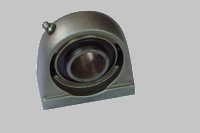
1. Advantages of stainless steel bearing seats
1. Excellent corrosion resistance: Stainless steel bearings are not prone to rust and have strong corrosion resistance.
2. Washable: Stainless steel bearings can be washed down without the need to re lubricate to prevent rusting penalties.
3. Can run in liquids: Due to the materials used, we can run bearings and bearing seats in liquids.
4. Slow depletion rate: AISI 316 stainless steel does not require oil or grease corrosion protection. Therefore, if the speed and load are low, lubrication is not necessary.
5. Hygiene: Stainless steel is naturally clean and non corrosive.
6. High heat resistance: Stainless steel bearings equipped with high-temperature polymer cages or cages without a complete complement structure can operate in a higher temperature range of 180° F to 1000° F。 (High temperature resistant grease required)
2. Differences between 304 and 440 stainless steel bearings
Stainless steel bearings are now divided into three materials: 440, 304, and 316. The first two are common stainless steel bearings. The material 440 is definitely magnetic, which means that a magnet can absorb it. 304 and 316 are micromagnetic (many people say it's not true that they don't have magnetism), which means that a magnet can't hold on, but you can feel a little bit of attraction. Generally, stainless steel bearing blocks are made of 304 material. Is the material of the stainless steel bearing seat 304 or 440 better?
304 is a widely used stainless steel. Compared to 440 in terms of price, it has low corrosion resistance and mechanical properties. Its comprehensive performance is relatively comprehensive, so it has been widely used. However, the disadvantage is that further heat treatment cannot be performed to change its performance.
440 is a high-strength cutting tool steel (with A, B, C, F, etc. at the end) that can obtain high yield strength after proper heat treatment, and is among the hard stainless steels. A common application example is a razor blade.