


CONTACT US
- 13961432521(Manager Wang)
- 13813676349(Manager Zhu)
- zhuyun@czshcd.com
- Group 9, Caoqiao Village, Xueyan Town, Wujin District, Changzhou City
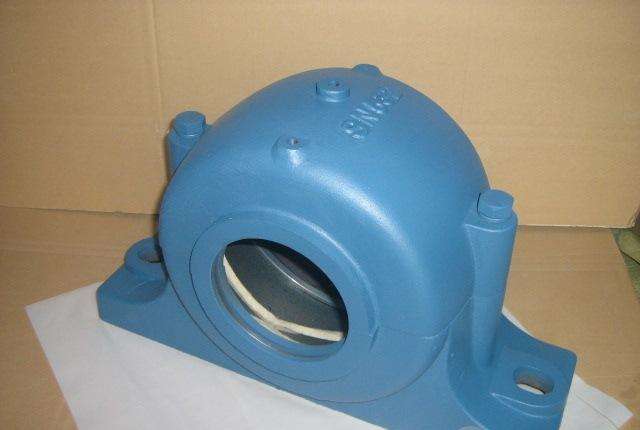
Common faults in the operation of stainless steel bearing pedestals
1。 Exhaustion and shedding
In the surface layer of the dovetail guide rail or in the inverted body of the inverted inlet bearing, due to the effect of alternating load changes, the metal material on the surface falls off and slowly expands to produce dents. If it operates again, it will create a shedding area. Due to poor installation or misalignment of the bearing bore and shaft axis with seats, some positions of the rolling bearing can bear significant loads, resulting in initial fatigue and ineffectiveness.
2。 Gaps and cracks
Defects in raw materials, thermal negligence, excessive interference, and poor composition design schemes, such as stresses caused by pipe trenches on the support plate surface, all contribute to ring cracks and fractures.
III. Imprinting
When external hard particles enter the rolling bearing and press between the overturning body and the dovetail guide rail, the overturning surface can be retracted. In addition, excessive impact loads can also cause partial plastic deformation of the surface, resulting in dents. When the rolling bearing is stationary, even if the load is not large, the vibration of the surrounding environment will produce symmetrical dents on the dovetail guide rail.
4。 damage
When the roller bearing has poor sealing performance, dust or fine particles enter the roller bearing, or the lubrication is poor, the surface may be seriously damaged or damaged, increasing the vibration and noise of the roller bearing.
5。 Galvanic etching
Depending on the amount of current flowing through the rolling bearing, small sparks may be caused, which may cause partial quenching and small dents or grayish black repair on the surface layer of the contact surface. Deep pits appear when it is relatively serious.